
When people start their diet and fitness journey, the first thing they hear is: “Stop eating carbs.” Some cut fats completely, others overload protein shakes. The result? Low energy, mood swings, poor workouts, and zero consistency.
The truth is simple your body needs carbs, protein, and fat in the right balance. Weight loss, muscle gain, and overall health don’t come from eliminating food groups, but from understanding how to balance them properly.
In this blog, we’ll explain how to balance carbs, protein, and fat in your diet and fitness chart in a simple, practical way that you can actually follow.
Why Macronutrient Balance Matters in Diet and Fitness
Carbs, protein, and fats are called macronutrients because your body needs them in large amounts. Each plays a unique role in your diet and fitness routine.
When one is too low or too high:
- Energy drops
- Fat loss slows
- Muscle recovery suffers
- Cravings increase
Balanced nutrition keeps your body fueled, active, and consistent.
Understanding the Role of Carbohydrates
Carbs are often misunderstood, but they are your body’s main energy source.
What Carbs Do:
- Fuel workouts and daily activities
- Support brain function
- Prevent muscle breakdown
Best Carb Sources:
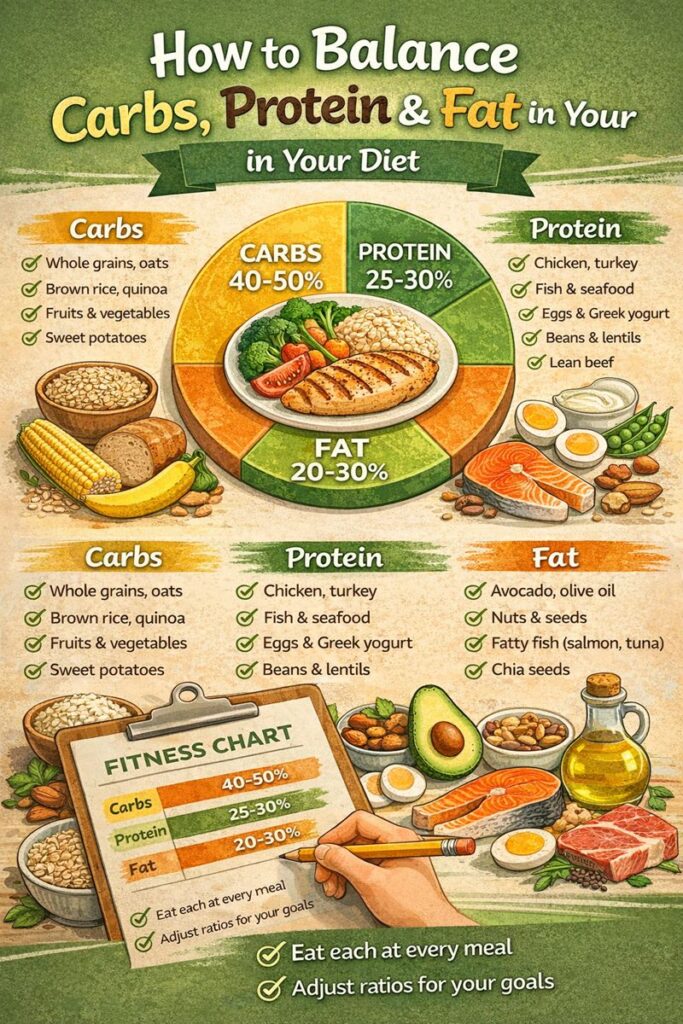
- Brown rice, oats, quinoa
- Whole wheat roti
- Fruits and vegetables
- Sweet potatoes
How Much Carbs You Need:
Carbs should make up 40–50% of your daily calories, depending on activity level. In your diet and fitness chart, carbs are best consumed in the morning and around workouts.
Understanding the Importance of Protein
Protein is the building block of muscles and is essential for fat loss.
Why Protein Is Crucial:
- Builds and repairs muscles
- Increases metabolism
- Keeps you full for longer
Best Protein Sources:
- Paneer, tofu, curd
- Eggs, chicken, fish
- Dal, rajma, chana
- Whey protein (if needed)
How Much Protein You Need:
A good rule is 1.2–1.8 grams per kg of body weight.
In any diet and fitness plan, protein should be included in every meal.
Understanding Healthy Fats
Fats are not your enemy. In fact, they support hormones, digestion, and brain health.
Why Healthy Fats Matter:
- Improve hormone balance
- Support vitamin absorption
- Keep you satisfied
Healthy Fat Sources:
- Nuts and seeds
- Ghee (in moderation)
- Olive oil, mustard oil
- Avocado
How Much Fat Is Ideal:
Fats should make up 20–25% of daily calories.
Avoid trans fats and fried foods that harm your diet and fitness progress.
Creating a Balanced Diet and Fitness Chart
Here’s a simple way to balance macros throughout the day:
Breakfast:
- Carbs + Protein
Example: Oats with milk and nuts / Vegetable omelette with toast
Lunch:
- Carbs + Protein + Fat
Example: Roti, dal, sabzi, salad, ghee
Evening Snack:
- Protein + Fat
Example: Nuts, sprouts, yogurt
Dinner:
- Protein + Vegetables
Example: Paneer/chicken with vegetables or soup
This structure keeps energy stable and supports fat loss.
Common Macro Balance Mistakes to Avoid
Many people unknowingly damage their diet and fitness progress.
Avoid These Mistakes:
- Cutting carbs completely
- Eating protein only at dinner
- Overusing oils and fats
- Relying on supplements instead of food
Balance is always better than extremes.
How to Adjust Macros Based on Your Goal
For Weight Loss:
- Moderate carbs
- High protein
- Controlled fats
For Muscle Gain:
- Higher carbs
- High protein
- Moderate fats
For General Fitness:
- Balanced carbs, protein, and fats
Your diet and fitness chart should change as your goals change.
Final Thoughts: Balance Is the Key to Long-Term Results
There is no single perfect ratio for everyone. The best diet and fitness plan is the one you can follow consistently.
Remember:
- Don’t fear carbs or fats
- Prioritise protein
- Eat whole, natural foods
- Stay patient and consistent
When carbs, protein, and fats are balanced correctly, your body feels energized, workouts improve, and results come naturally.
A balanced diet and fitness chart is not about restriction it’s about nourishment.